How to 'really' collect art
28-03-2026
Forget the headlines about $100 million Basquiats or the champagne at TEFAF. With Art
Basel Hong Kong and Art Rotterdam in
full swing this weekend, the art world is buzzing. But
for most of us, collecting art isn't about competing with billionaires or making "smart" investments. It’s
about living with art that moves us.
I was recently listening to De Kunst
Cast podcast by Pelle Samhoud
and Selwyn Senatori (in Dutch, btw). They give
some advice on
where to
start when collecting art, but sadly, they also spent more time arguing with each other than giving concrete
advice. That’s why I want to give you some practical, concrete actions you can take today.
As Magnus Resch emphasizes in
his book How
to Collect Art (which I can recommend), the art world is more accessible than it looks, if you
know how to navigate the gatekeepers...
So, to help you navigate your first art purchase, I’ve outlined a four-step process. Of course, the world of
art
isn't always so predictable, it’s rarely a straight line from A to B, but this process might be a good way
to
find your footing and start building a collection.
Source: Unsplash
Step 1: Train your eye (before you open your wallet)
This is the first thing any serious collector will tell you. It sounds simple, but it isn’t. Diving into the
art world without a plan is like walking into a guitar store and being told to "pick one" when you’ve never
held an instrument. You have no idea what you actually like yet.
The most common advice is "buy what you like," but that’s a trap if you don't know what’s out there. You
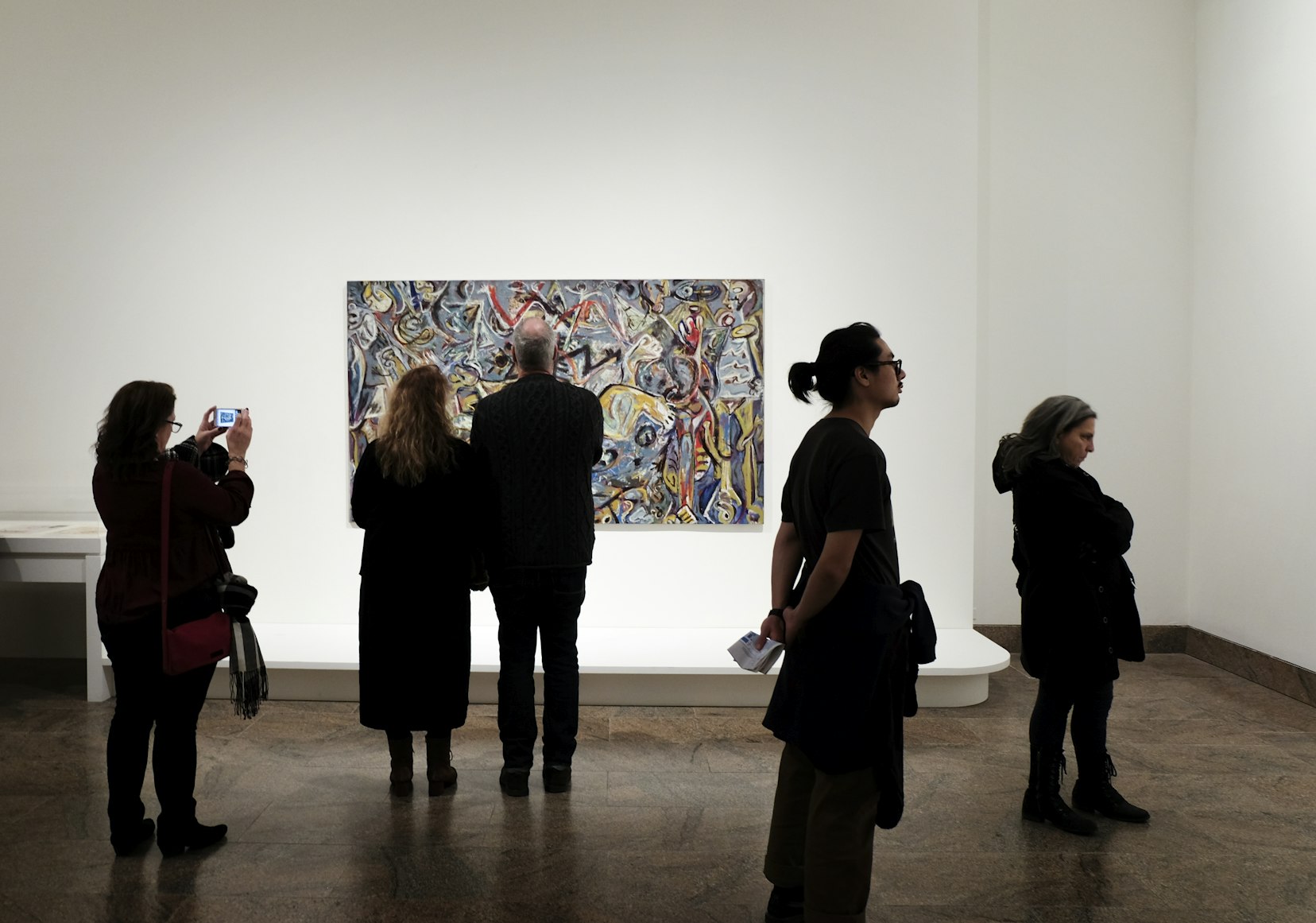
need to see everything. Before spending a dime, visit every local museum, gallery, non-profit space, and
open studio in your city. Follow these places on social media so the algorithm starts pushing new artists
into your feed. (And while you’re at it, follow me on Instagram too!)
After a while, you’ll start to identify your genre. Do you like the quiet precision of impressionism, or the
raw energy of abstract expressionism? Are you into the old-school classics or the ultra-modern?
Before answering those questions, apply the 50-piece rule: (this isn't a real industry rule, I just made it
up) aim to look at at least 50 pieces
of art in person before you even check a price tag. It builds a mental library of what "good" looks like to
you.
Step 2: Where to buy (and why the middleman matters)
Once you’ve found your niche, it’s time to move from spectator to owner. You don't need a paddle at Sotheby’s. You just need a curious mind and a polite, firm voice.
Buying direct
In the digital age, artists are entrepreneurs. Instagram is the world’s biggest gallery. Following local artists and reaching out via DM can lead to studio visits where you buy directly from the source.
- The benefit: You build a personal connection with the creator.
- The price: Usually the most affordable entry point because there’s no gallery commission.
The gallery route
Walking into a local gallery is different. It’s important to remember that it is a business. Most galleries operate on a 50/50 split, they take half the sale price to cover rent, marketing, and staff.
- The advantage: Galleries curate. They’ve done the hard work of filtering out the noise for you.
- The leverage: Here’s a public secret: the "conversion rate" (the percentage of visitors who actually buy) is incredibly low. Because of this, you have power as a buyer.
The art fair
Then there are the fairs, like Art Rotterdam. These are high-energy, but prices can be slightly inflated due to the high costs of renting a booth. However, because there are thousands of visitors but very few actual buyers, galleries are often desperate to "break even" on their travel costs by the end of the weekend.
Step 3: Negotiate the price
Resch’s data-driven insights highlight that the art market is far from transparent. While that might sound shady, this works in your favor. When you find a piece you love, be polite, but bold. Ask, "is there a better price for a first-time collector?" Understand the wiggle room you have when buying art, a 10% discount is standard; a 15–20% discount is possible, especially on the last day of a fair. The "aggressive" edge here is if you are ready to pay immediately, use that as a closing tool because galleries hate chasing invoices and payments.
Step 4: (Do not) invest in art
Let’s be blunt: for 99% of art, the secondary market is non-existent. If you buy a painting for $2,000 today, the odds of you selling it for $2,000 (or even $200) in ten years are slim. Most art does not appreciate in value, most art is a "consumption good", like fine wine or a luxury sofa. Resch often points out that the "investment" side of art is reserved for a tiny fraction of the global elite. Instead, when buying art, you should do the the living room test: Ask yourself: “can I look at this every single morning while I drink my coffee?” If the answer is yes, the return on investment is the joy it brings to your home.
Closing thoughts
The world of art shouldn't be a locked room for elites. It’s a playground. Go out this weekend, hit a couple of local galleries, and don't be afraid to ask the "silly" questions. When you finally find that piece that makes your heart skip a beat, remember: be polite, stay grounded, and negotiate like a pro. Follow for more art and art market insights